Woovly is a creator-led social commerce platform where content meets shopping. Users can explore reels, reviews, and routines to discover and buy beauty and personal care products. The existing interface struggled to translate content consumption into meaningful purchases. I led the end-to-end UX revamp for both mobile and web platforms from research and audits to wireframing, UI, and handoff. The goal was to bridge the content-to-commerce gap, increase conversion efficiency, and create a visually intuitive experience aligned with the habits of a Gen Z–millennial audience from Tier 2 and 3 cities.
This was not just a redesign; it was a strategic rethinking of the user journey from inspiration to checkout, while also laying down a scalable design system for future growth.
Process:
I followed a goal-oriented, user-first design process, combining qualitative observation with quantitative analytics.
Key steps:
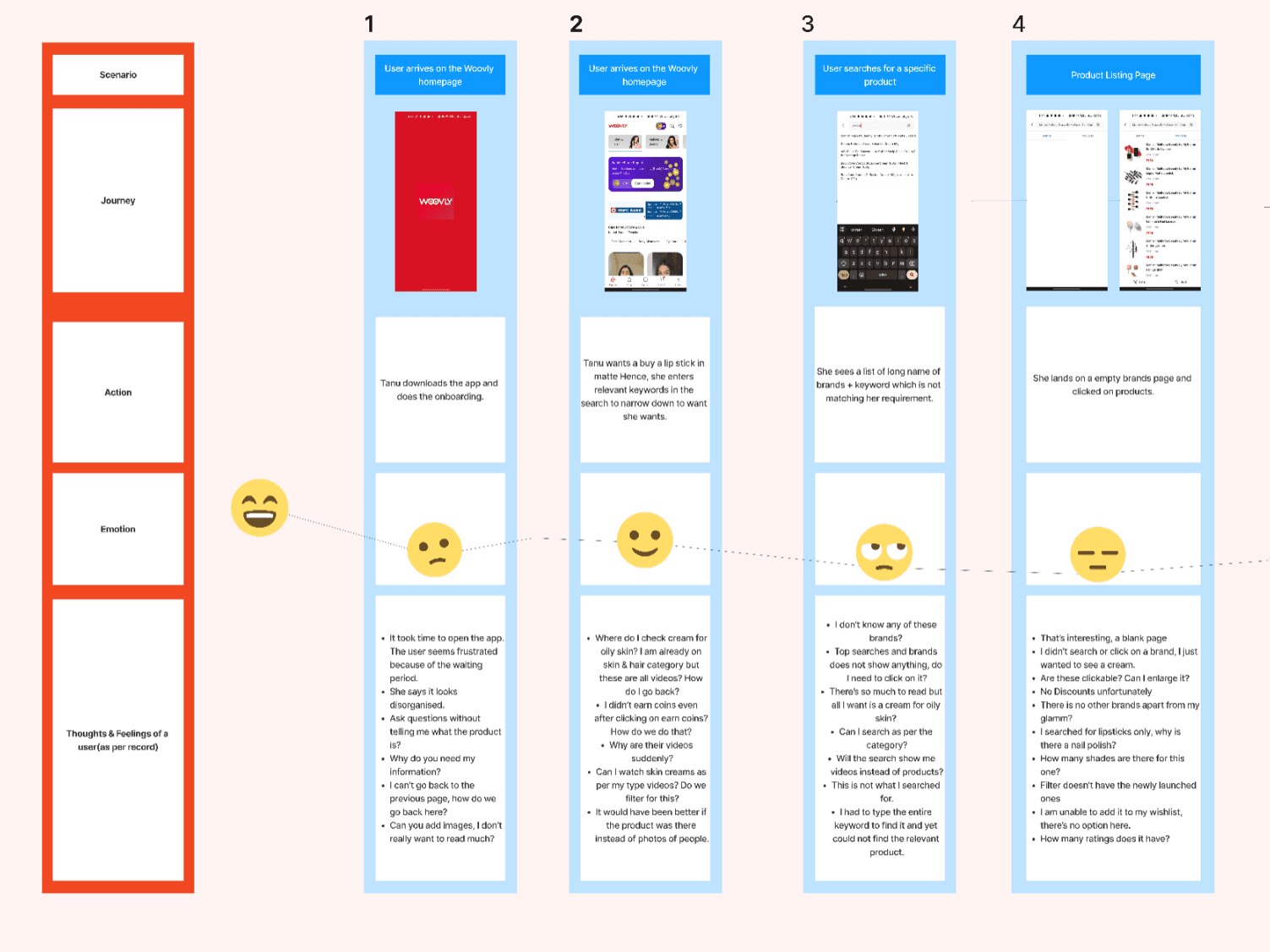
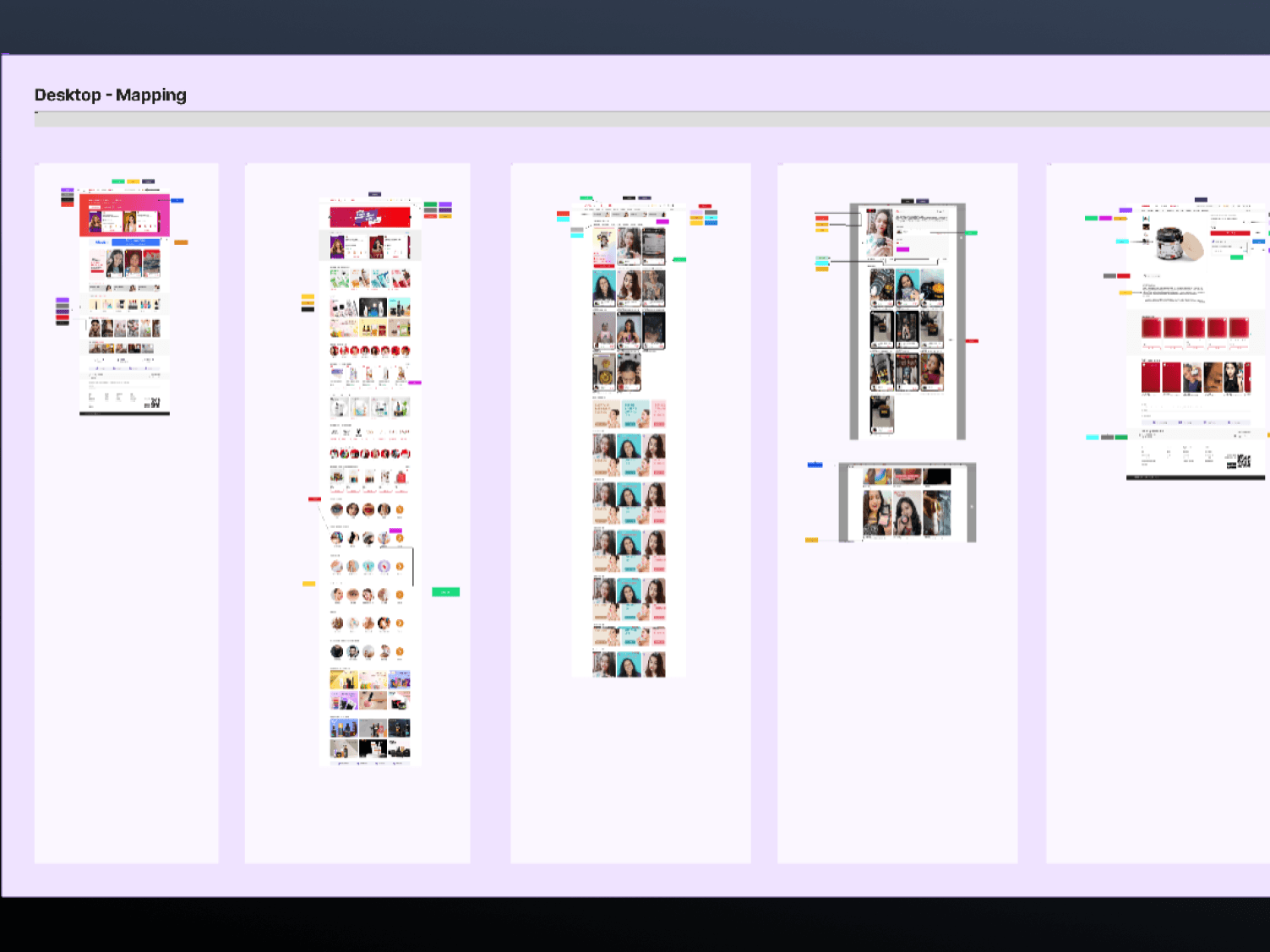
Heuristic evaluation and GA + Mixpanel funnel analysis to spot pain points in navigation, cart drops, and discovery.
Built a behavioural persona spectrum, especially focused on social scrollers, impulse shoppers, and content-first explorers.
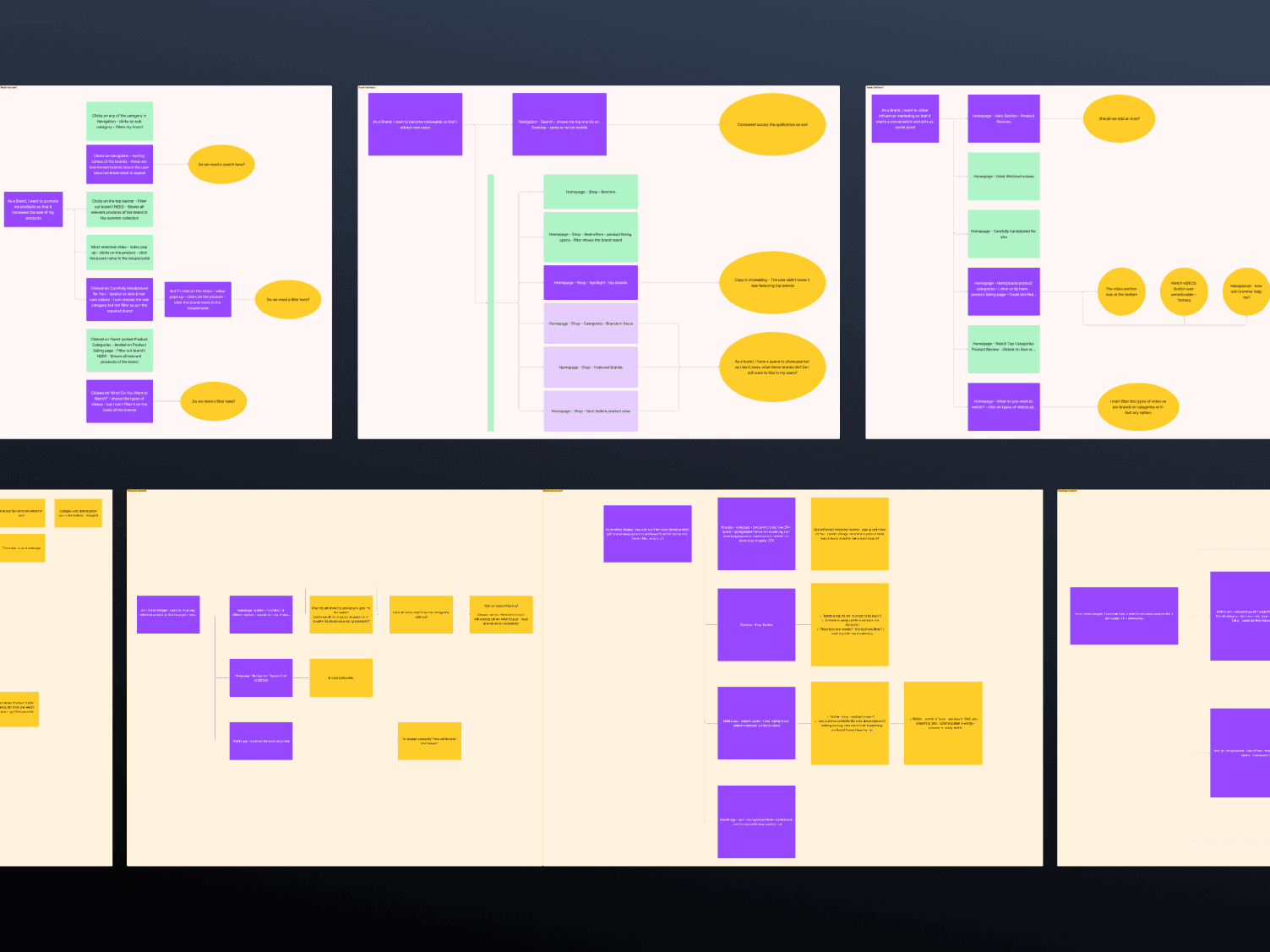
Created high-impact user flows, from home to PDP, reel to product, and product to cart, that reduced decision fatigue.
Prioritised a mobile-first design language, optimised for slow internet zones and smaller screens.
Designed with atomic design principles to support scalable component reuse across multiple product surfaces.
Constant feedback loops with devs and PMs to ensure feasibility, edge-case handling, and faster implementation.
Problem:
The previous experience had no cohesive journey between content engagement and product discovery. Major issues included:
Content and commerce lived in silos reels, and posts had weak linkage to products.
Lack of trust-building elements, new users didn’t feel confident transacting.
The UI had a poor visual hierarchy, causing users to miss key CTAs or abandon the page mid-scroll.
Product pages didn’t address key buyer concerns like authenticity, reviews, or a visible community.
High bounce rates from the homepage and a lack of relevant onboarding cues.
The overall interface wasn’t aligned with modern social shopping patterns and needed to be reimagined from both UX and product funnel perspectives.
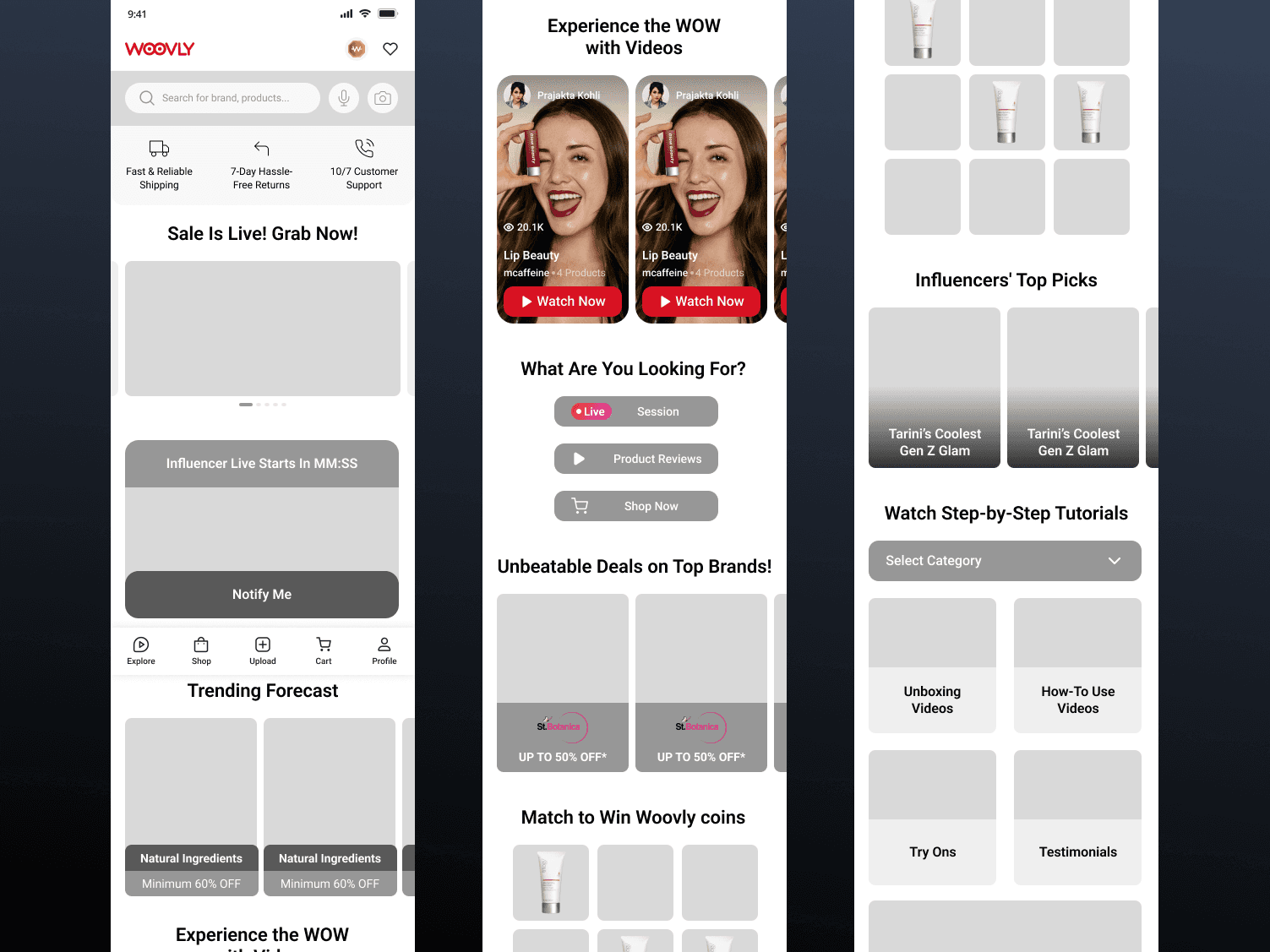
Solution:
My approach was to treat content as the storefront and make the transition to shopping as seamless as possible.
Key design interventions:
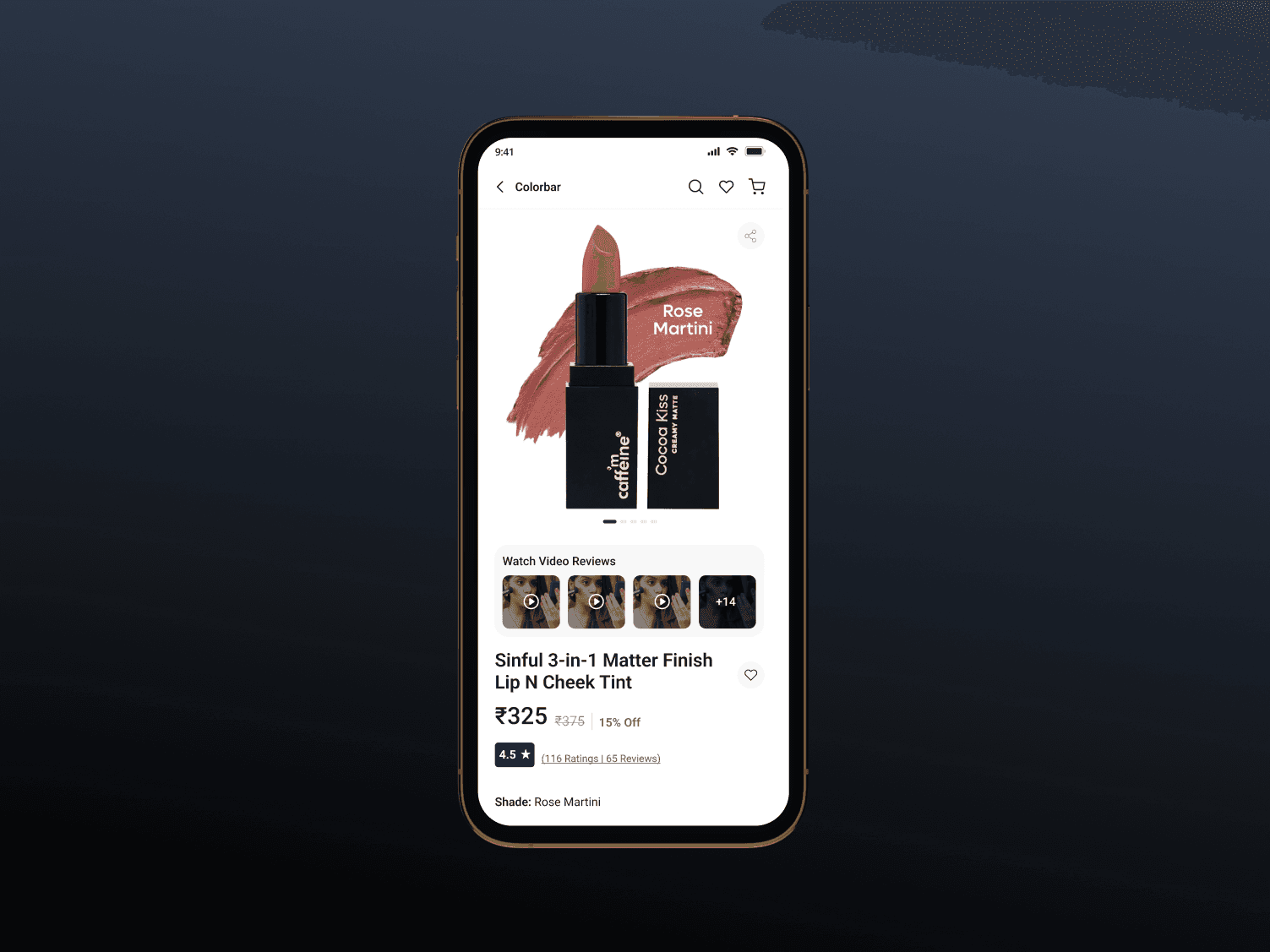
Reimagined homepage with dynamic content modules and category entry points.
Reel-to-cart experience: Tap a reel > see tagged products > view PDP in-overlay.
Integrated social proof: real user comments, “X people bought this”, and micro-reviews.
Simplified and shortened the checkout process into 3-tap flow with fewer distractions.
Added trust elements such as delivery guarantees, COD, verified creators, and return policy at the PDP level.
Established a flexible design system with typography, spacing tokens, interaction states, and a component library adaptable across mobile/web.
The design balanced business KPIs (conversion, retention) with emotional UX principles like trust, gratification, and ease.
Result:
The new experience significantly impacted both user behaviour and business performance:
+37% uplift in add-to-cart rate within 30 days post-launch.
22% increase in product click-through rate from homepage and content modules.
Improved session duration by 1.8x, especially on mobile.
Reduced drop-off in checkout funnel by 15%.
The design system was adopted by 3 internal teams for future feature builds.
More than the metrics, the team saw a cultural shift in how product and content teams collaborated using the new structure as a foundation for upcoming campaigns and creator drops.